
I’m glad you’re interested in making your own hard kombucha at home. It’s a fun and rewarding hobby that can also provide you with a delicious and healthy drink. In this blog post, I’ll answer some common questions about the process for making this hard kombucha recipe, and share some tips and tricks to make it easier and more enjoyable.
What is hard kombucha?
Hard kombucha is a fermented drink that has a higher alcohol content than regular kombucha, usually around 5% to 7% ABV. It is made by adding a different strain of yeast, such as champagne or ale yeast, to the kombucha during the second fermentation.
Hard kombucha can also be flavored with various fruits, herbs, spices, or other ingredients to make it more appealing and refreshing.
What are the benefits of hard kombucha?
Hard kombucha may have some benefits for your health and well-being, such as:
- Providing probiotics and antioxidants that can support your digestion and immune system.
- Having lower calories and less sugar than other similar drinks, which can help you maintain a healthy weight and blood sugar level.
- Being gluten-free and vegan-friendly, which can suit your dietary preferences and needs.
- Offering a natural and organic alternative to other alcoholic beverages, which can reduce your exposure to artificial additives and preservatives.
- Enhancing your mood and relaxation, which can improve your mental health and happiness.
Of course, you should always drink responsibly and in moderation, as too much alcohol can have negative effects on your health and behavior.
What are some tips and tricks for making hard kombucha?
Here are some tips and tricks that can help you make better hard kombucha at home:
- Use organic ingredients whenever possible, as they are less likely to contain pesticides or chemicals that can interfere with the fermentation process.
- Experiment with different types of tea, sugar, yeast, fruit, herbs, spices, or other flavorings to create your own unique hard kombucha recipes. Some popular combinations are ginger-lemon, blueberry-lavender, mango-turmeric, pineapple-coconut, peach-basil, etc.
- Keep an eye on the temperature and pH of your hard kombucha, as they can affect the fermentation speed and quality. The ideal temperature range is between 70°F and 80°F, and the ideal pH range is between 3.0 and 3.5. You can use a thermometer and a pH meter to monitor these factors.
Additional tips:
- Sanitize your equipment and utensils before and after each use, as any contamination can ruin your hard kombucha or cause mold or infection. You can use hot water, vinegar, or a commercial sanitizer to clean your items.
- Store your hard kombucha in dark glass bottles, as exposure to light can degrade the quality and flavor of your drink. You can also use swing-top bottles or flip-top bottles, as they are easier to seal and open than regular bottles.
- Drink your hard kombucha within a few months, as it can lose its freshness and potency over time. You can store it in the refrigerator or in a cool and dark place. If you notice any signs of spoilage, such as mold, off-odor, or off-flavor, discard it immediately.

Easy Hard Kombucha Recipe for Beginners
Ingredients
Instructions:
-
In a small bowl, dissolve the sugar in some warm water and add the champagne yeast. Stir well and let it sit for about 10 minutes until it becomes foamy.
-
Transfer the kombucha to a large glass jar or container with a wide mouth. Leave some space at the top for the yeast mixture and the fruit.
-
Add the yeast mixture to the kombucha and stir gently to combine.
-
Add the raspberries, lemon juice, and mint to the jar. You can lightly crush the raspberries and mint with a fork or a muddler to release their juices and flavors.
-
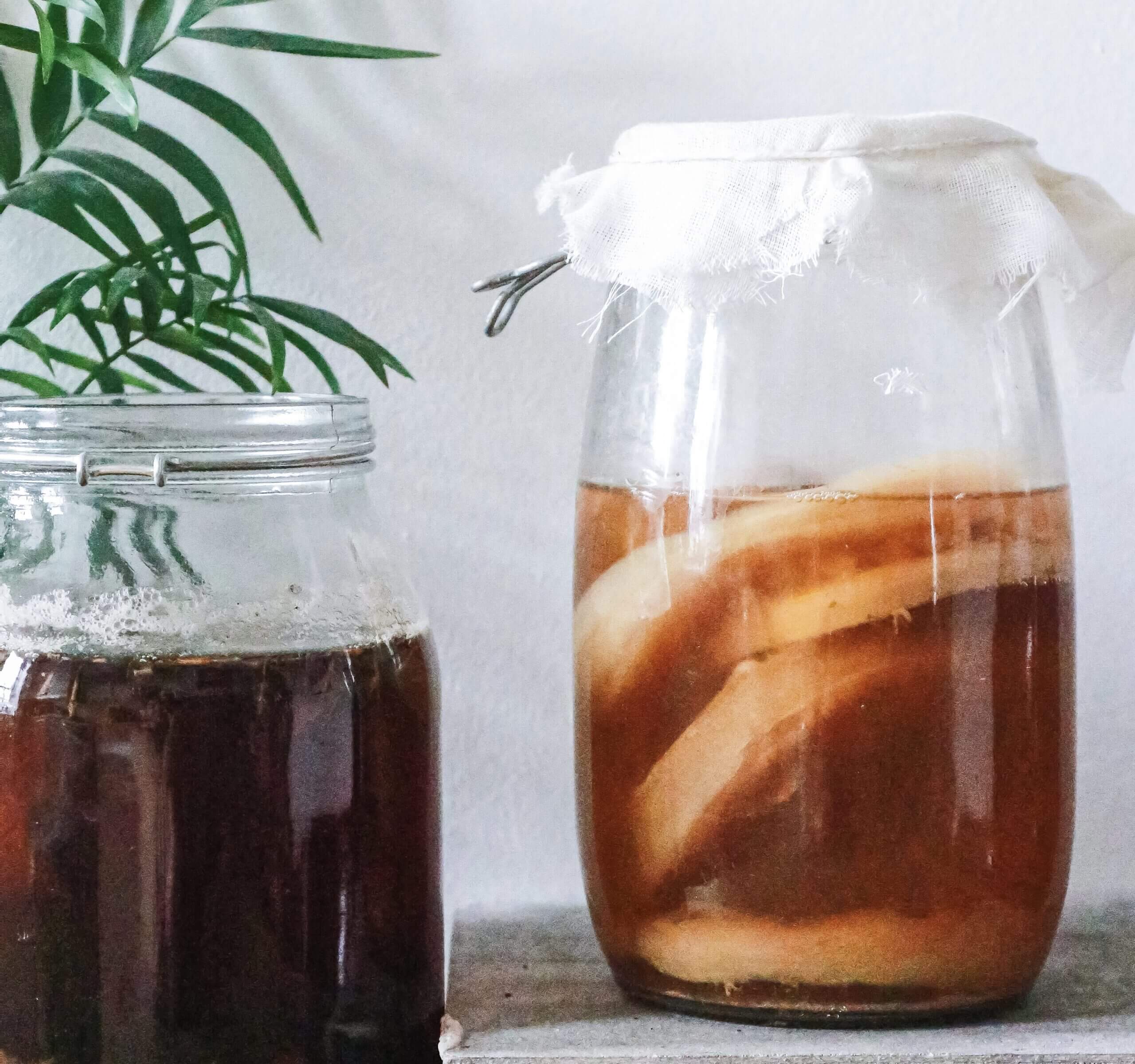
Cover the jar with a cheesecloth or a coffee filter and secure it with a rubber band. This will allow some air to escape while keeping out any contaminants.
-
Place the jar in a dark and warm place, such as a closet or a cabinet, for about 7 to 14 days. The longer you ferment, the more alcohol and carbonation you will get.
-
After the second fermentation is done, strain the hard kombucha through a fine-mesh sieve or a cheesecloth to remove the fruit and mint. You can taste it and adjust the sweetness or acidity if needed.
-
Transfer the hard kombucha to clean and sanitized bottles, leaving some headspace at the top. Seal the bottles with caps or corks and attach airlocks to them. This will prevent any explosions from the pressure buildup.
-
Store the bottles in a cool and dark place for another 3 to 10 days to carbonate. You can check the carbonation level by opening one bottle carefully and seeing how fizzy it is.
-
Enjoy your homemade hard kombucha chilled or over ice. You can also garnish it with some fresh raspberries and mint leaves if you like.
